
Erling Haaland’s winning goal in Sunday’s Manchester derby came in controversial circumstances – and there are still a number of questions left unanswered.
The striker’s goal was initially disallowed for offside on the pitch before VAR overturned the decision.
The VAR officials deemed that Haaland was played onside by Manchester United defender Patrick Dorgu. However, Manchester City’s Enzo Fernandez was in an offside position as he attempted to play the ball before it reached Haaland.
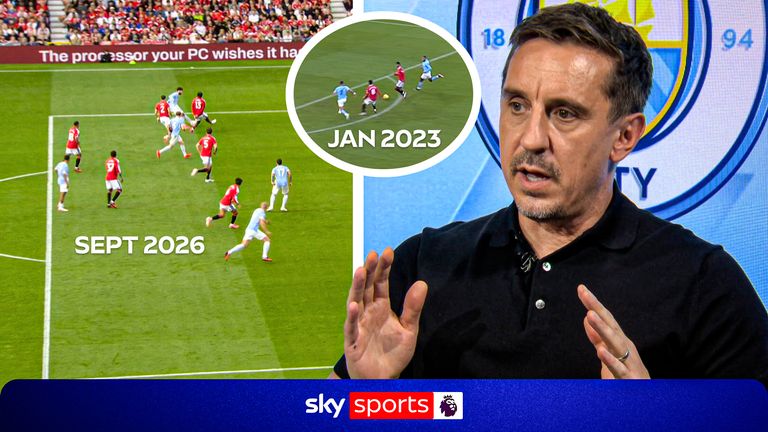
Here, we look at some of the key questions surrounding the incident…
Have Pro Ref explained why the goal was awarded?
Pro Ref – the Professional Game Referees formerly known as the PGMOL or PGMO – confirmed on Sunday night that an error was made when City’s winning goal was awarded.
While acknowledging “an error of judgement”, their statement only offered a partial explanation for why the goal was mistakenly awarded.
Having admitted the goal should have remained ruled out because Fernandez was offside, the statement declared: “On this occasion, the VAR did not recognise the likely impact of his position.”
But the overarching question of why the VAR failed to appreciate that a player six yards from goal, making a diving header for a ball between two opponents, was not judged to have either impacted play or potentially impacted play remains unanswered.
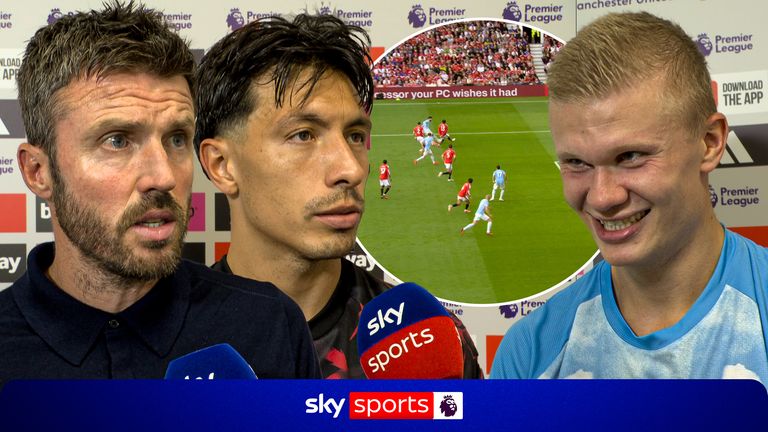
Could the mistake have happened because the VAR was focused on whether Fernandez played the ball?
This, currently, appears to be the most logical explanation.
In their mid-game post on X explaining the decision, Match Centre wrote: “The VAR also deemed that while in an offside position, Fernandez didn’t play the ball.”
During Sky Sports’ match coverage, replays were also shown of the VAR team apparently scrutinising whether or not Fernandez touched the ball as it flew across the six-yard box.
So was it the case that the VAR became distracted by fixating on a technicality that didn’t actually matter given the offside rule clearly stipulates that a player can be offside regardless of whether or not he touches the ball?

Why did the Pro Ref statement say the goal should have been sent for an on-field review?
According to Pro Ref, the initial offside decision was made against Erling Haaland. He, though, was onside.
The review then moved on to Fernandez, who was correctly deemed to be in an offside position by the VAR team.
The problem was that they then apparently, and incorrectly, focused entirely on whether he touched the ball.
What the VAR couldn’t do, however, was confirm the goal was rightly ruled out – for the Fernandez offside – for the wrong reason – the Haaland offside.
Hence Pro Ref’s assertion that the VAR ought to have requested referee Michael Oliver make an on-field review in which Oliver would have been asked to make a subjective decision on whether Fernandez impacted play.
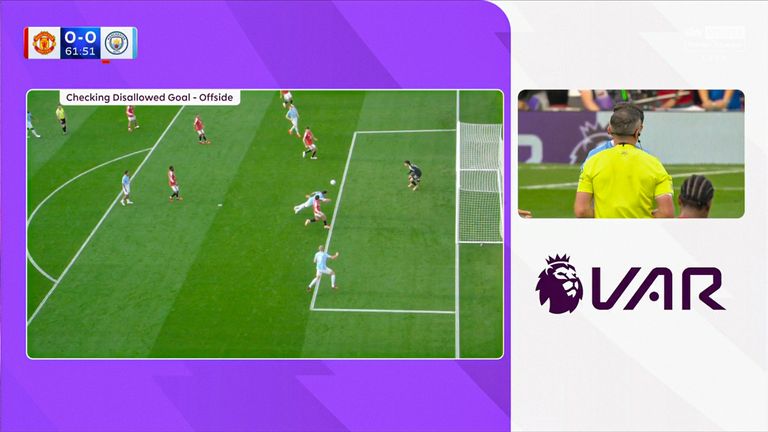
Was Lammens also impacted by Fernandez?
Yes. Replays of Haaland’s goal also show that the Manchester United goalkeeper made an initial reaction to Fernandez, raising his arms in anticipation of a header and putting him off balance for when Haaland struck the ball.
But Martinez had already been impacted by Fernandez’s position, so the goal should have been disallowed regardless of whether Lammens was distracted by Fernandez’s attempt to play the ball.
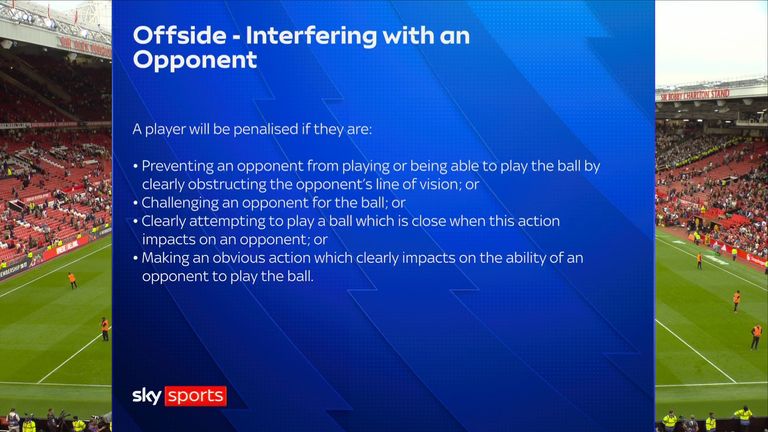
Offside law graphic shown during coverage of Manchester United’s match against Man City
Was the on-field decision wrong?
Yes and no – the yes because the offside was given against an onside player, the no because the goal should have been ruled out for offside.
So the VAR couldn’t have definitively ruled out the goal?
No. Because the on-field decision was against Haaland, the only course of action, if the process was followed to the letter, was to ask the referee to make an on-field review.
Who was the VAR?
Sunday’s VAR was Matt Donohue.
While Donohue has only ever refereed four Premier League games, he has substantial experience as a VAR. In 2025/26, he was the VAR for 24 Premier League matches and six as Assistant VAR.
Why didn’t TV viewers see offside lines drawn during the game?
The Premier League is using semi-automated offside technology this season which provides a kick-point graphic for incidents under review.
This is different to the previous process in which the VAR teams would manually place crosshairs to determine offside calls and then draw lines.
Did the officials also forget they made a VAR check?
One final unanswered question from Manchester’s derby is whether the officials also forgot about the VAR check when determining how much added-on time to play at the end of the game.
Haaland’s goal was scored after 59 minutes and 24 seconds.
Following the lengthy review, play didn’t restart until 63 minutes and 15 seconds. But despite that delay, and numerous others during the course of the half, just five minutes were added on.